Delicious Braided Breakfast Danish Recipe: A Sweet Treat for Any Occasion
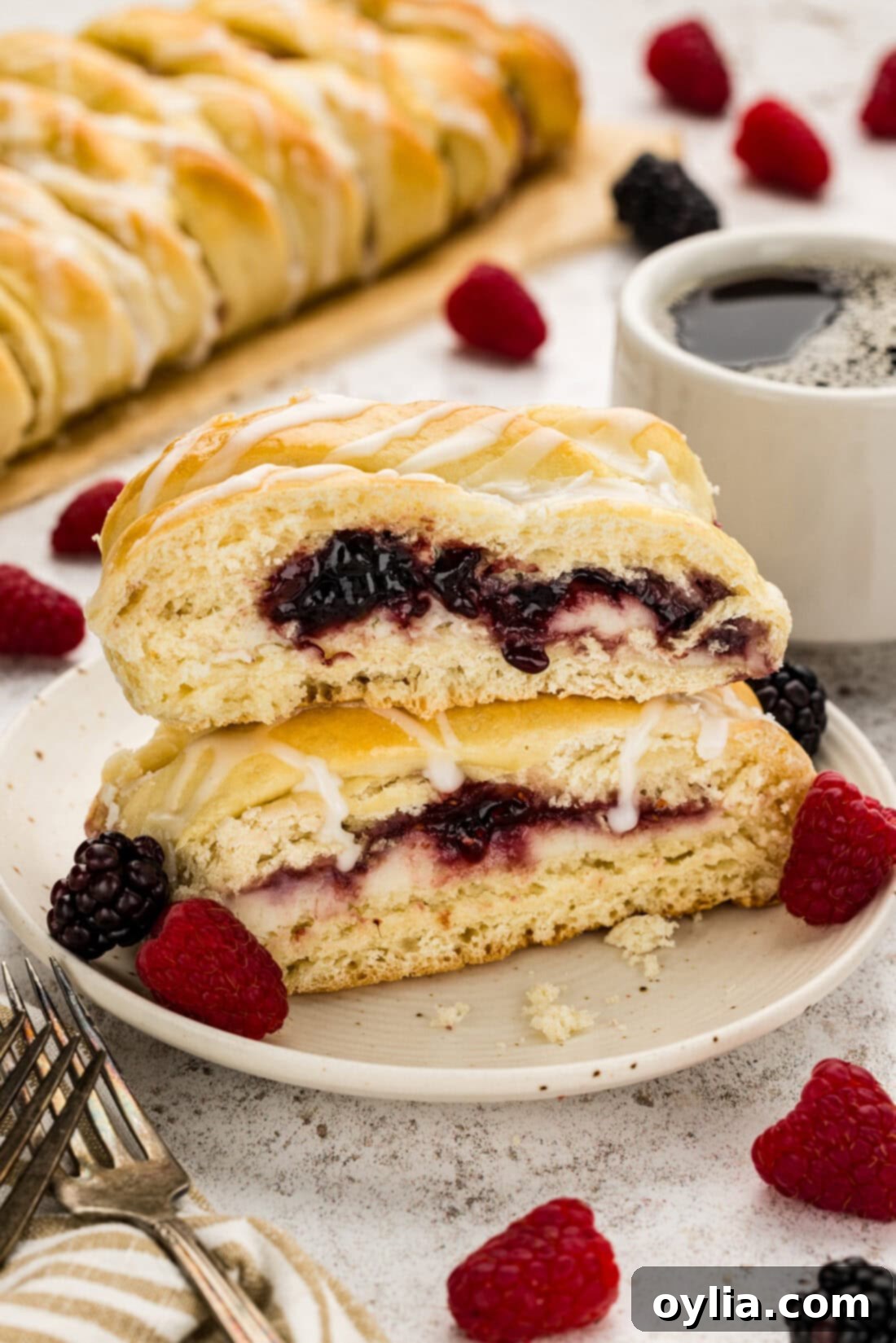
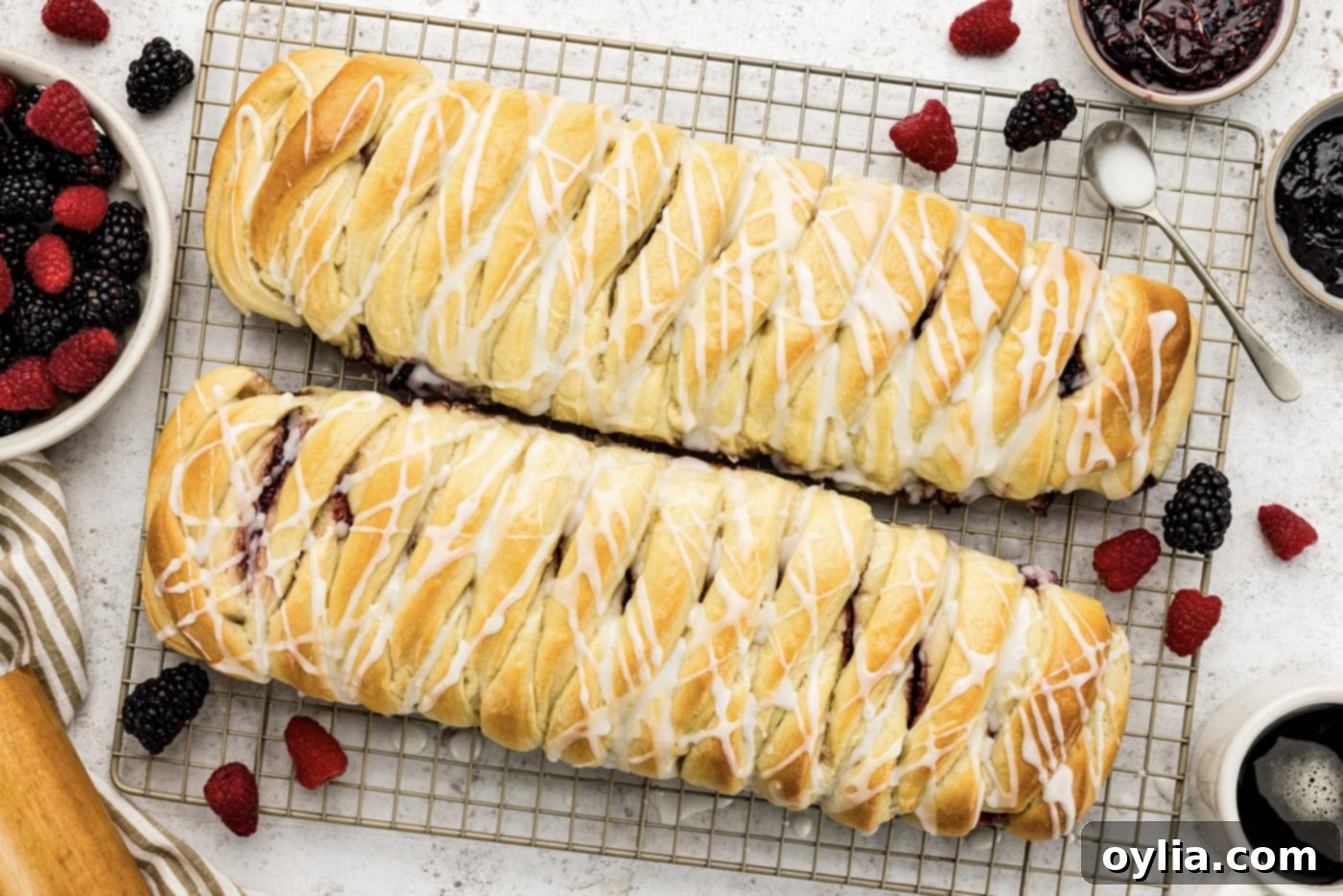
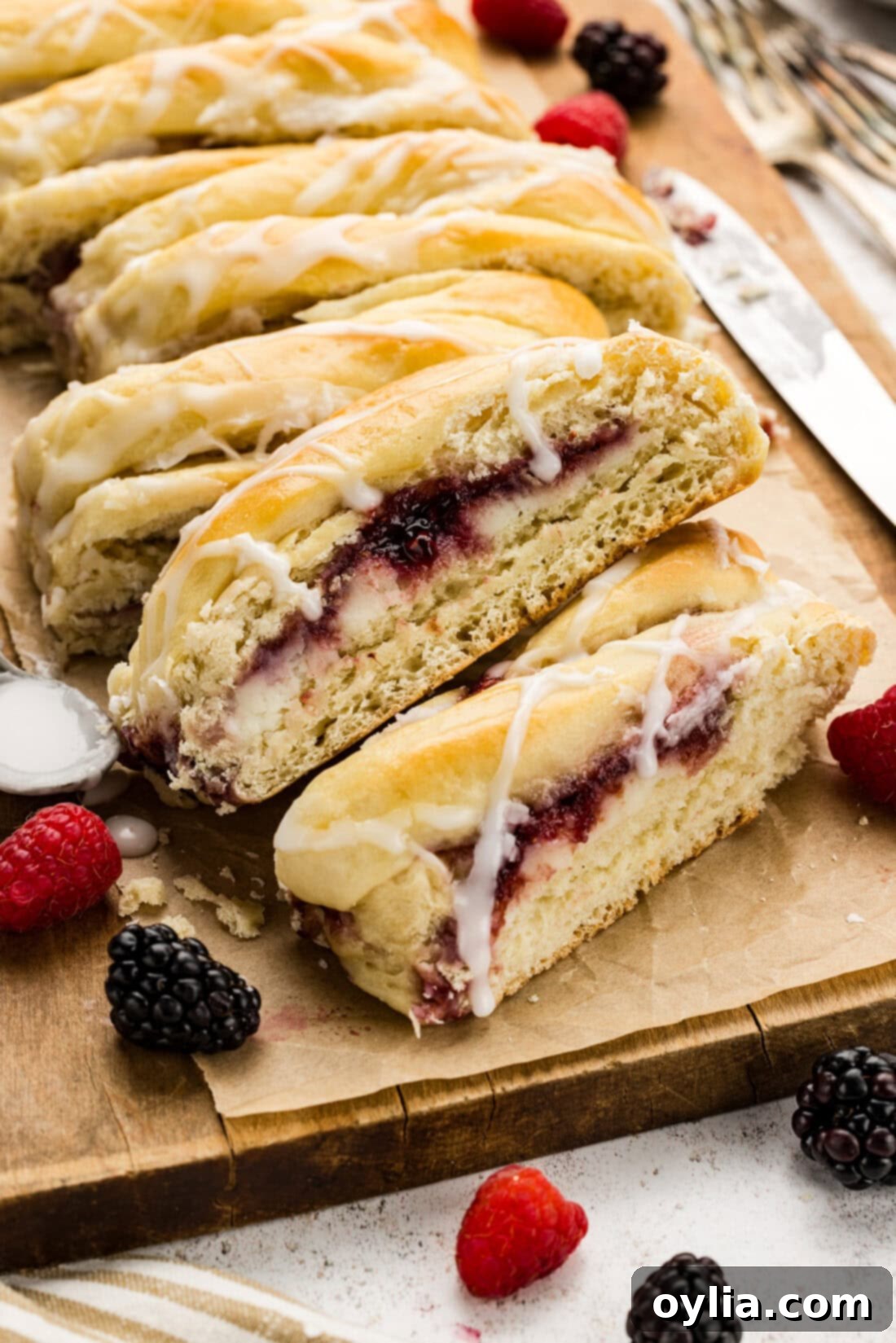
Indulge in the delightful combination of sweet jam or fruit preserves and rich cream cheese, all nestled within the soft, cakey dough ribbons of this braided breakfast danish. This recipe is perfect for a special breakfast or brunch.
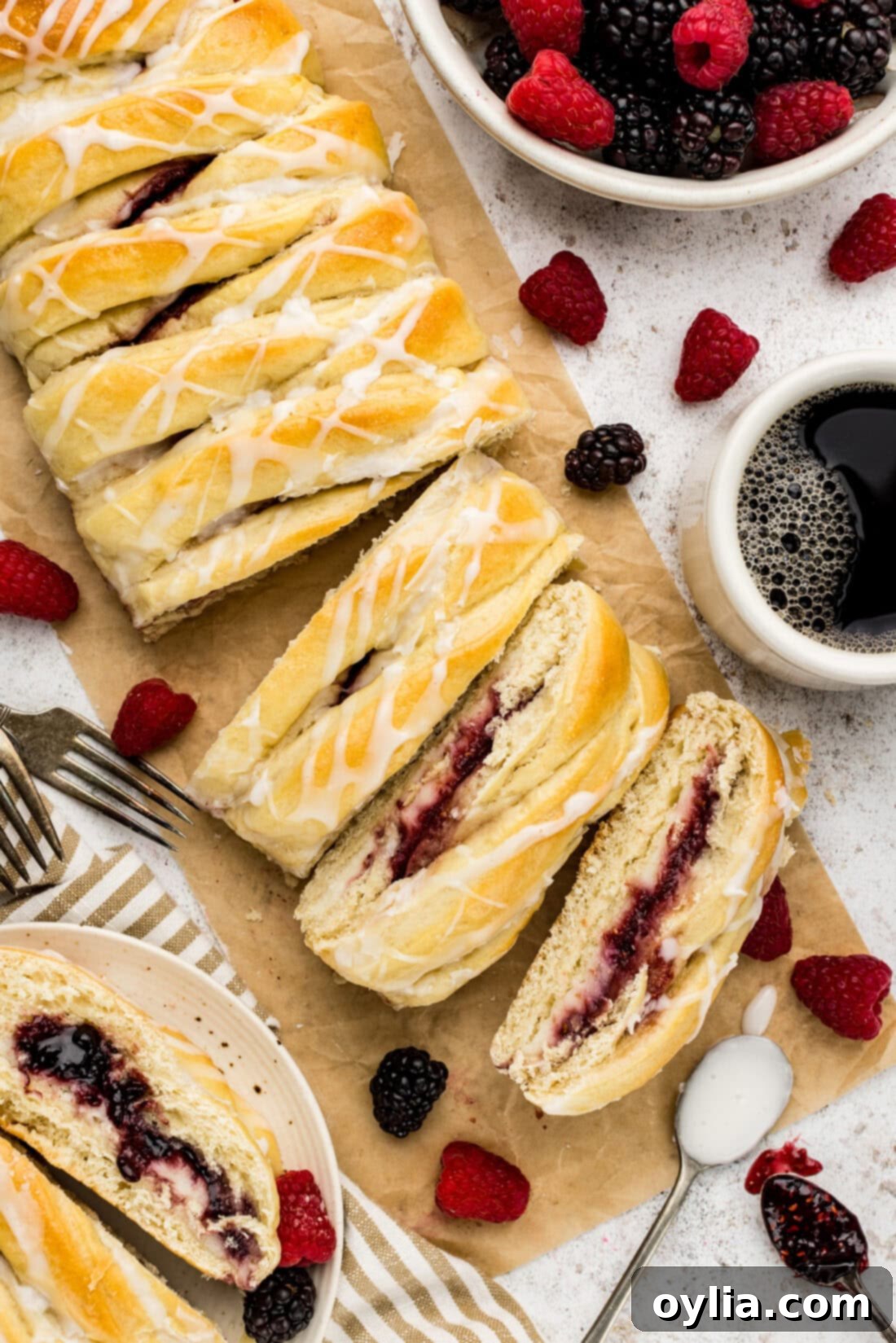
Why You’ll Love This Braided Danish Recipe
This recipe yields two beautiful braided breakfast danishes, making it ideal for sharing with family, friends, or neighbors. However, if you prefer, you can easily halve the recipe. Because it makes two loaves, it’s a wonderful option for a sweet Easter or Christmas morning breakfast, especially if you prepare it the night before. Imagine waking up to the aroma of freshly baked danish!
There’s simply nothing quite like a homemade danish. What sets this recipe apart is the ability to customize the filling with a variety of different jams or preserves. Think of the possibilities! Every bit of effort you invest in creating this stunning pastry will be rewarded when you see those golden-brown braids emerge from the oven. It’s similar to coffee cake, but with a softer, fluffier crumb, rather than the flaky, crescent-dough texture often associated with pastries. Truly a delectable experience!
If you’re looking for a simpler recipe, consider trying cranberry cream cheese pastries, which utilize store-bought crescent dough for ease and convenience.
Essential Ingredients for Your Homemade Danish
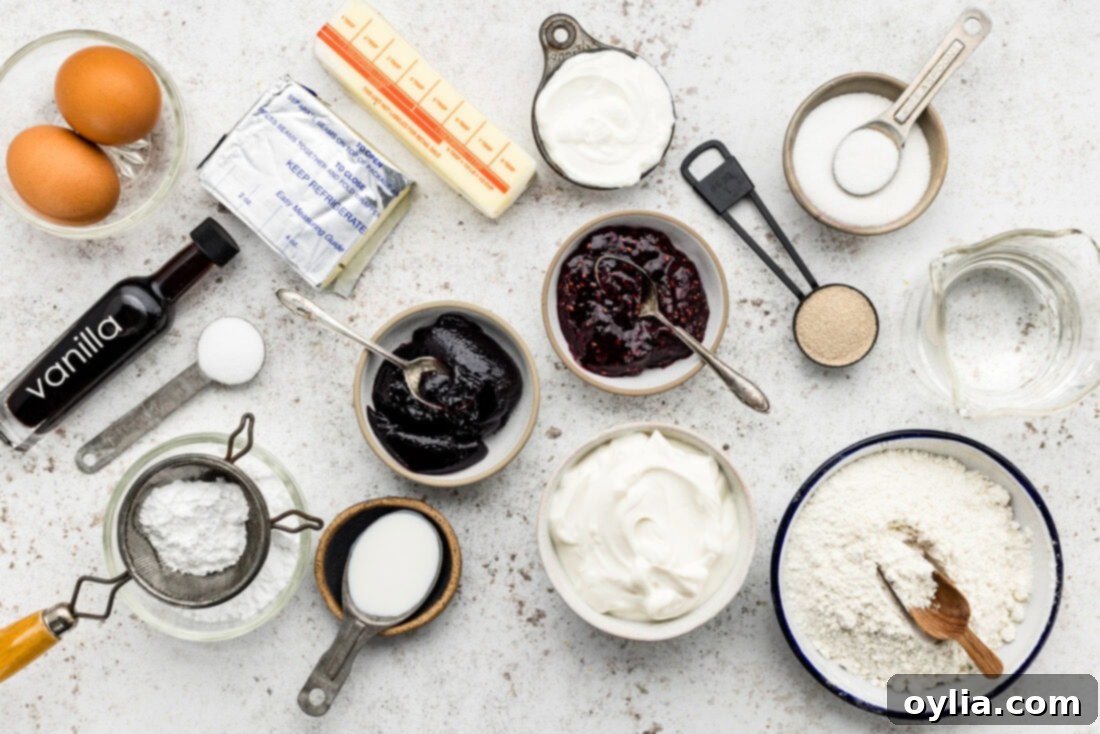
You can find a printable version of this recipe with detailed measurements, a list of ingredients, and instructions at the end of this blog post. Keep scrolling!
Ingredient Insights and Substitution Options
Sponge: Before starting, it’s vital to verify that your yeast hasn’t passed its expiration date. The optimal temperature for the warm water used in the sponge should range from 105°F to 115°F. If necessary, use a thermometer to ensure precise water temperature. Keep in mind that temperatures above 120°F can easily kill your yeast, so avoid using hot water. Warm water is all that’s needed! For the most accurate and consistent results, consider using a kitchen scale to measure your flour.
Dough: Allow any chilled ingredients, such as yogurt, butter, and eggs, to reach room temperature before you start making the dough. This helps to create a smoother, more cohesive dough.
Filling: Almost any kind of fruit jam or preserves will work beautifully in this danish. Consider using apple, raspberry, blackberry, strawberry, apricot, marmalade, or lemon curd. Even blueberry or cherry pie filling would be a fantastic addition!
Step-by-Step Guide: How to Make a Braided Breakfast Danish
The following step-by-step instructions and photos are intended to guide you through the process of creating this delicious recipe. For a printable version of the recipe that contains measurements and complete instructions, Jump to Recipe below.
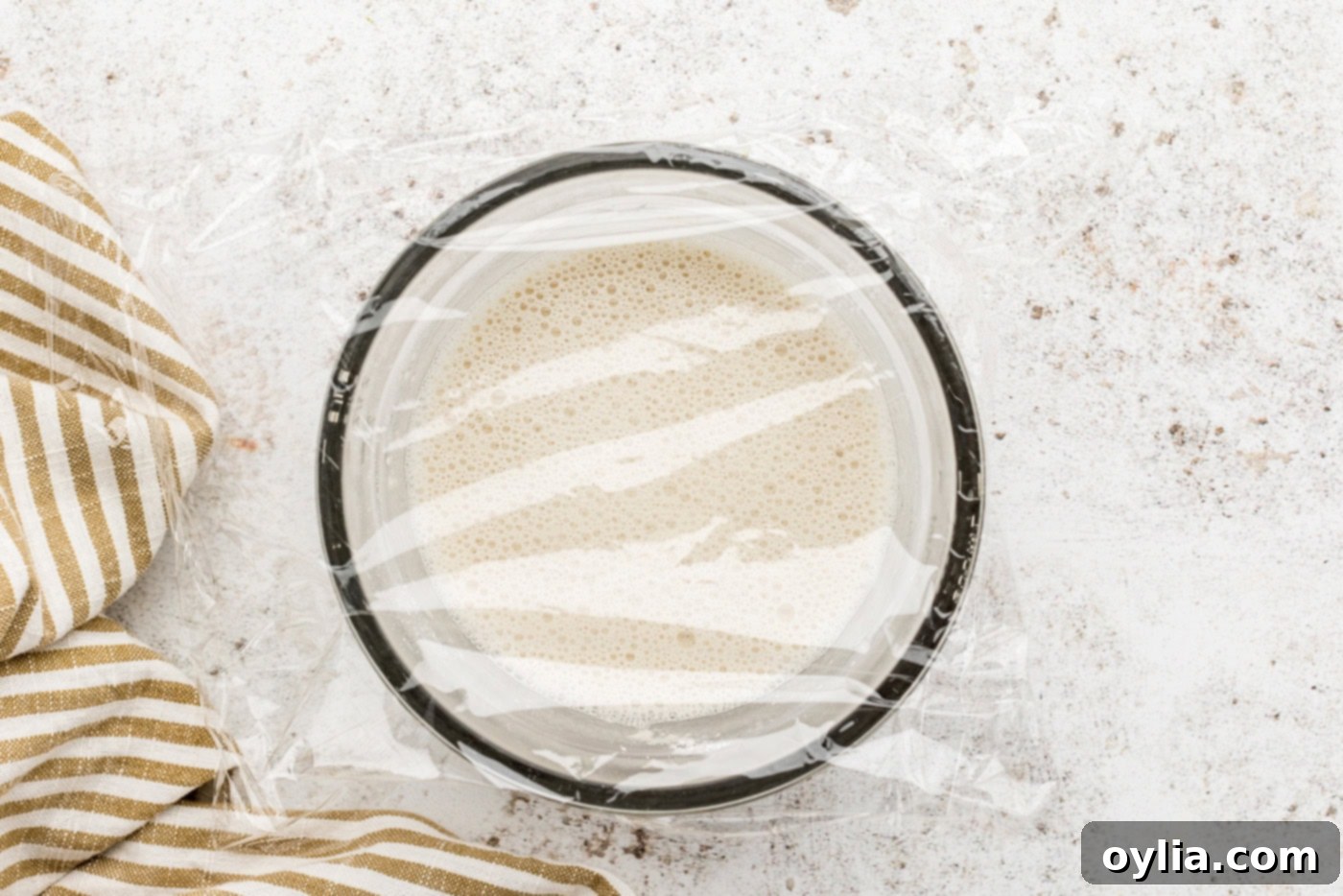
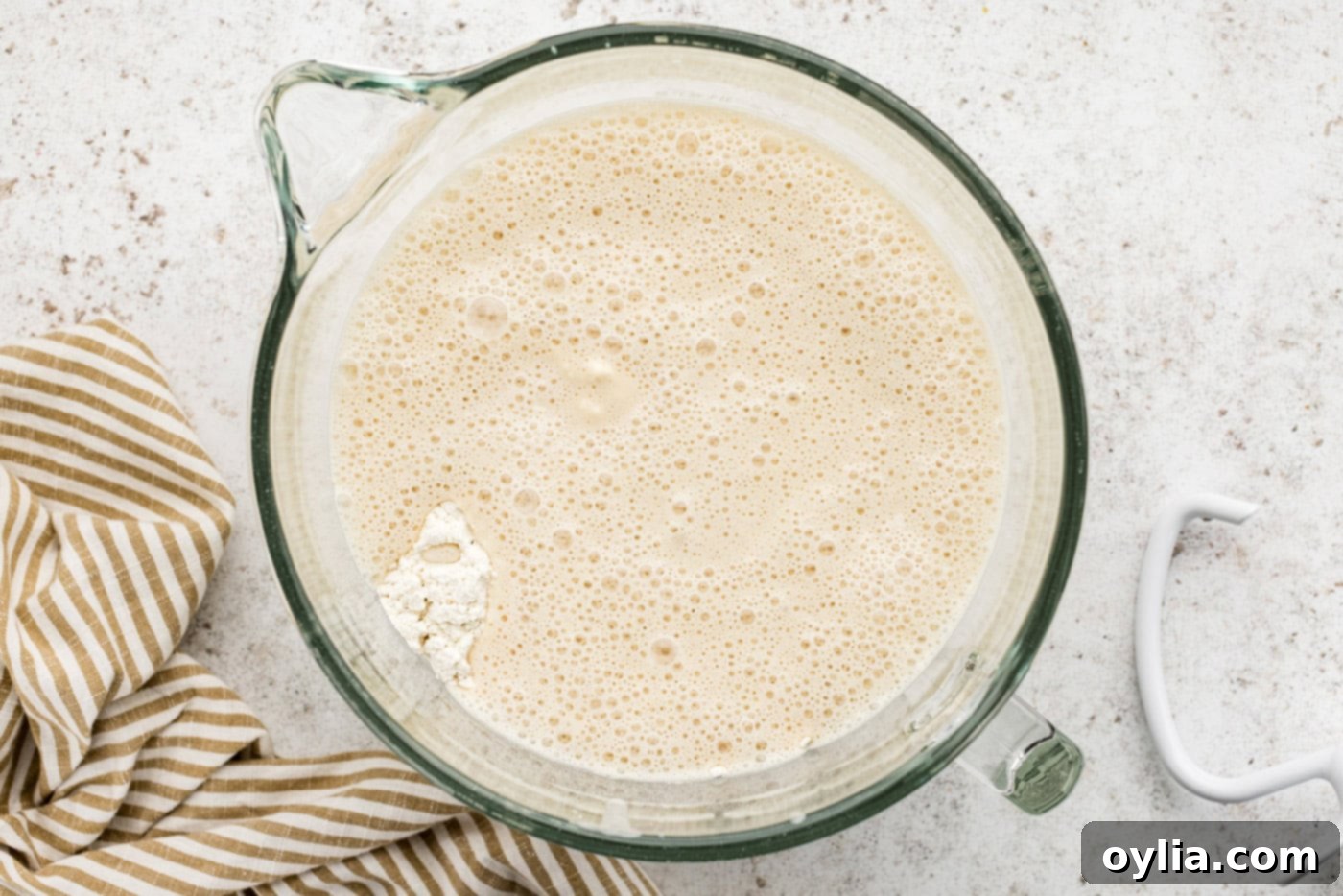
- In a small bowl, combine the sponge ingredients. Stir well to combine, loosely cover with plastic wrap, and set aside to proof for 10 to 15 minutes. This activates the yeast and gives it a head start.
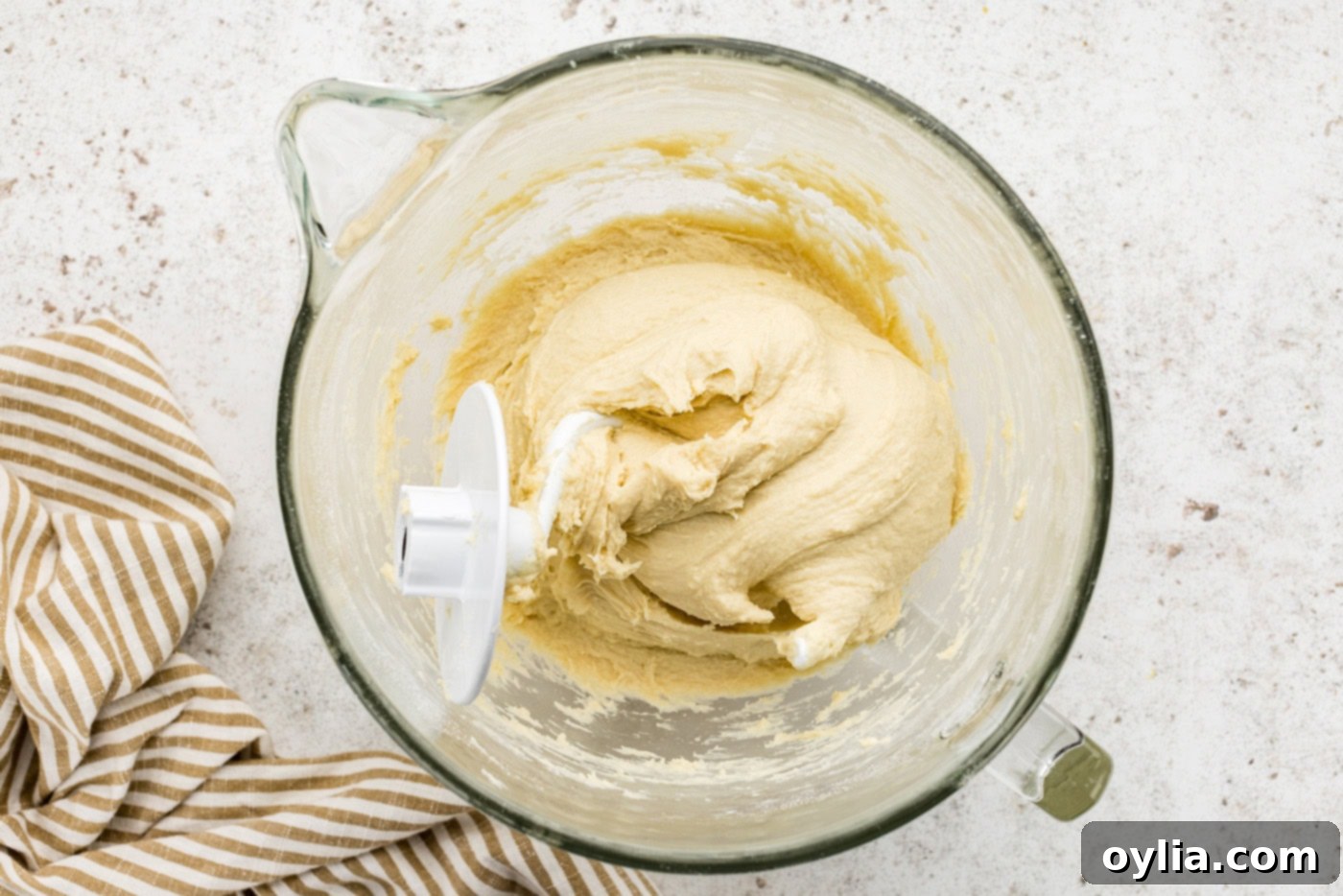
- In the bowl of your stand mixer, combine the dough ingredients with the sponge. Using the dough hook attachment, knead on speed 2 until a soft, smooth dough forms, approximately 5 to 6 minutes. The dough should be elastic and pull away from the sides of the bowl.
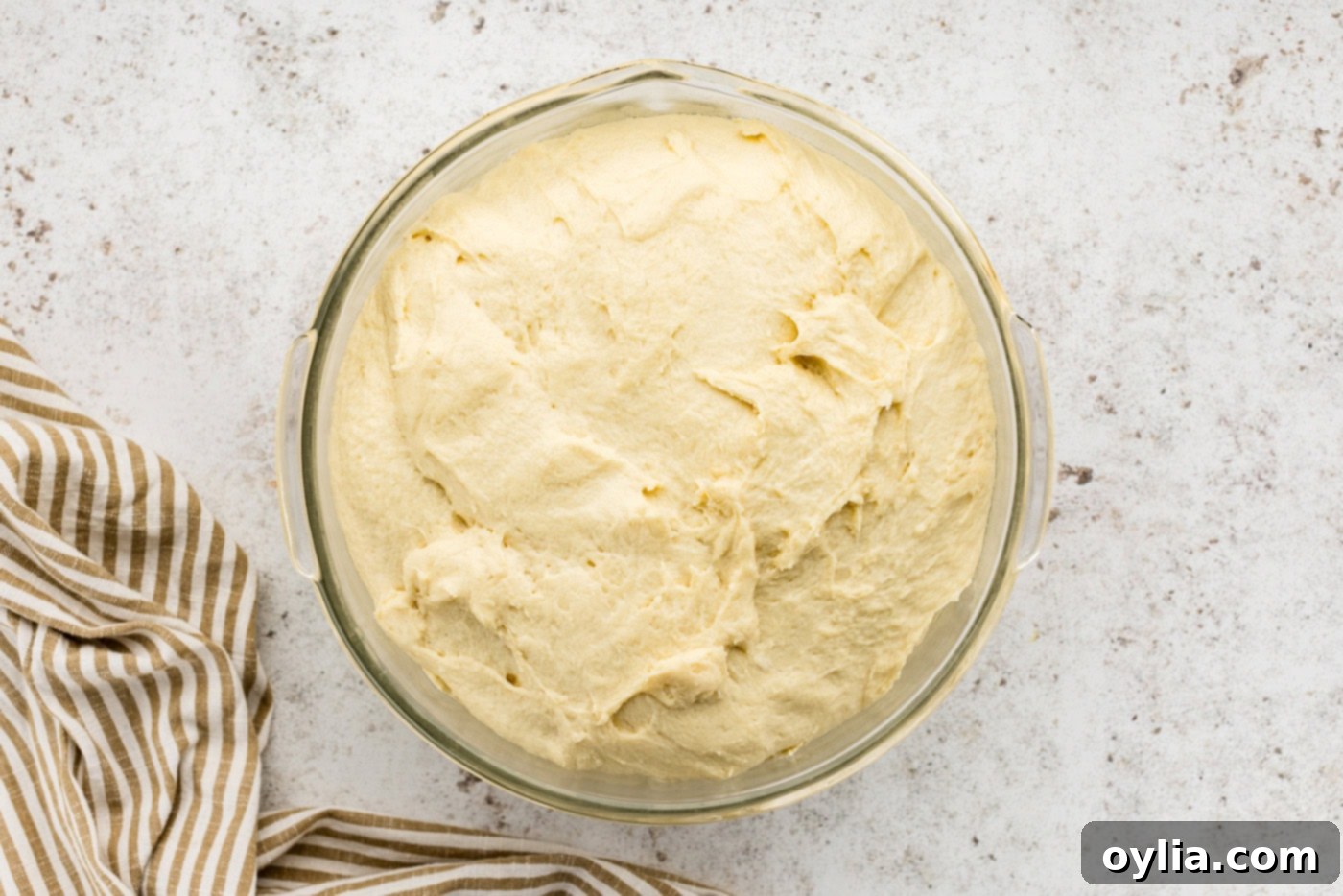
- Place the kneaded dough in a lightly greased bowl, cover with plastic wrap, and allow to rise for 60 to 90 minutes, or until it is quite puffy and nearly doubled in size. This allows the yeast to work its magic, creating a light and airy dough.
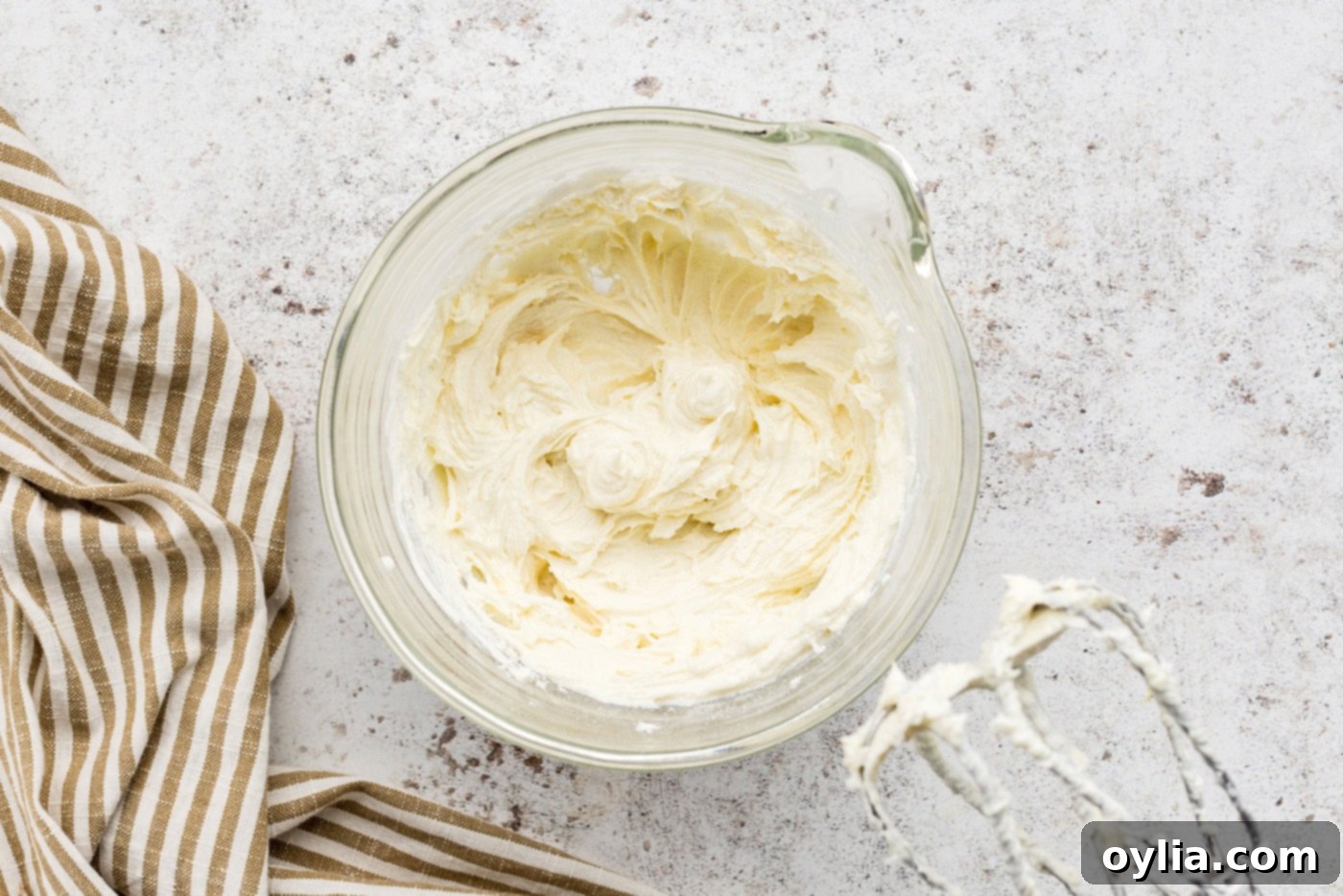
- While the dough is rising, prepare the filling. In a small bowl, combine all the filling ingredients (except the preserves), mixing until smooth and lump-free. Set aside both the filling and the preserves until you are ready to fill the braids.
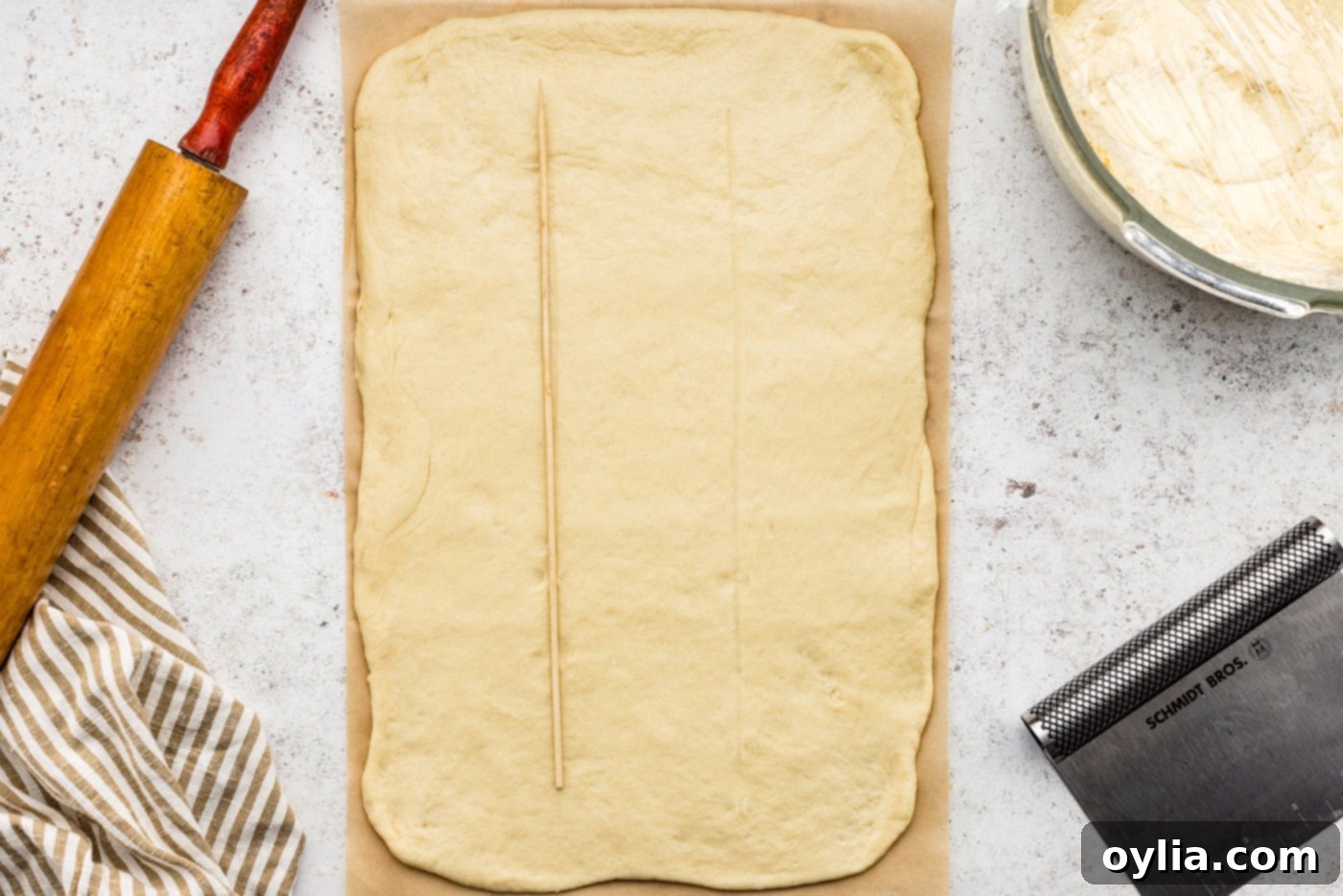
- Cut two pieces of parchment paper into 10″x15″ rectangles. Gently deflate the risen dough and divide it in half. Cover one half with plastic wrap and set it aside while you roll out the first piece into a 10″ x 15″ rectangle on one of the parchment sheets. Rolling the dough on parchment paper makes it much easier to transfer the bread to the baking sheet.
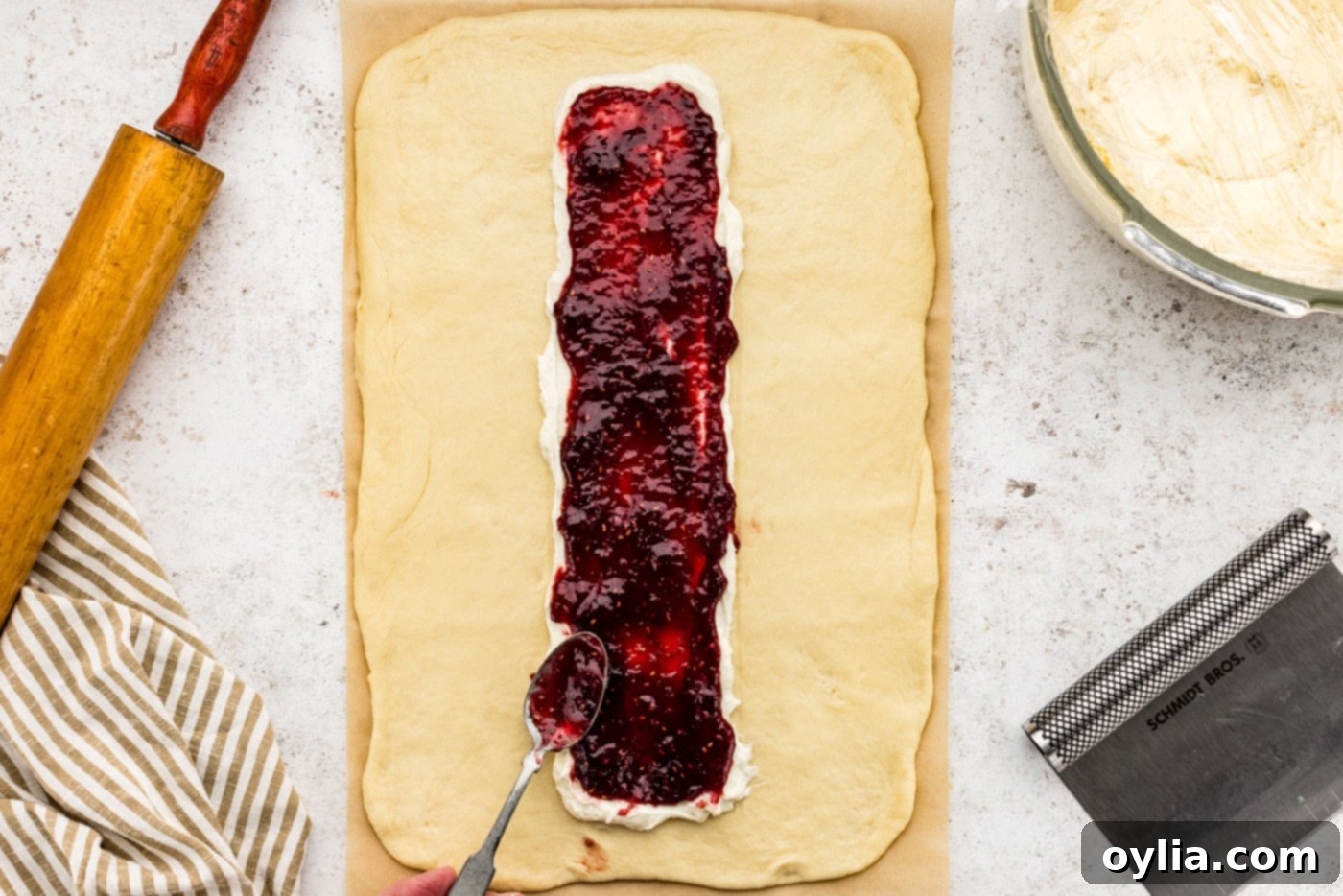
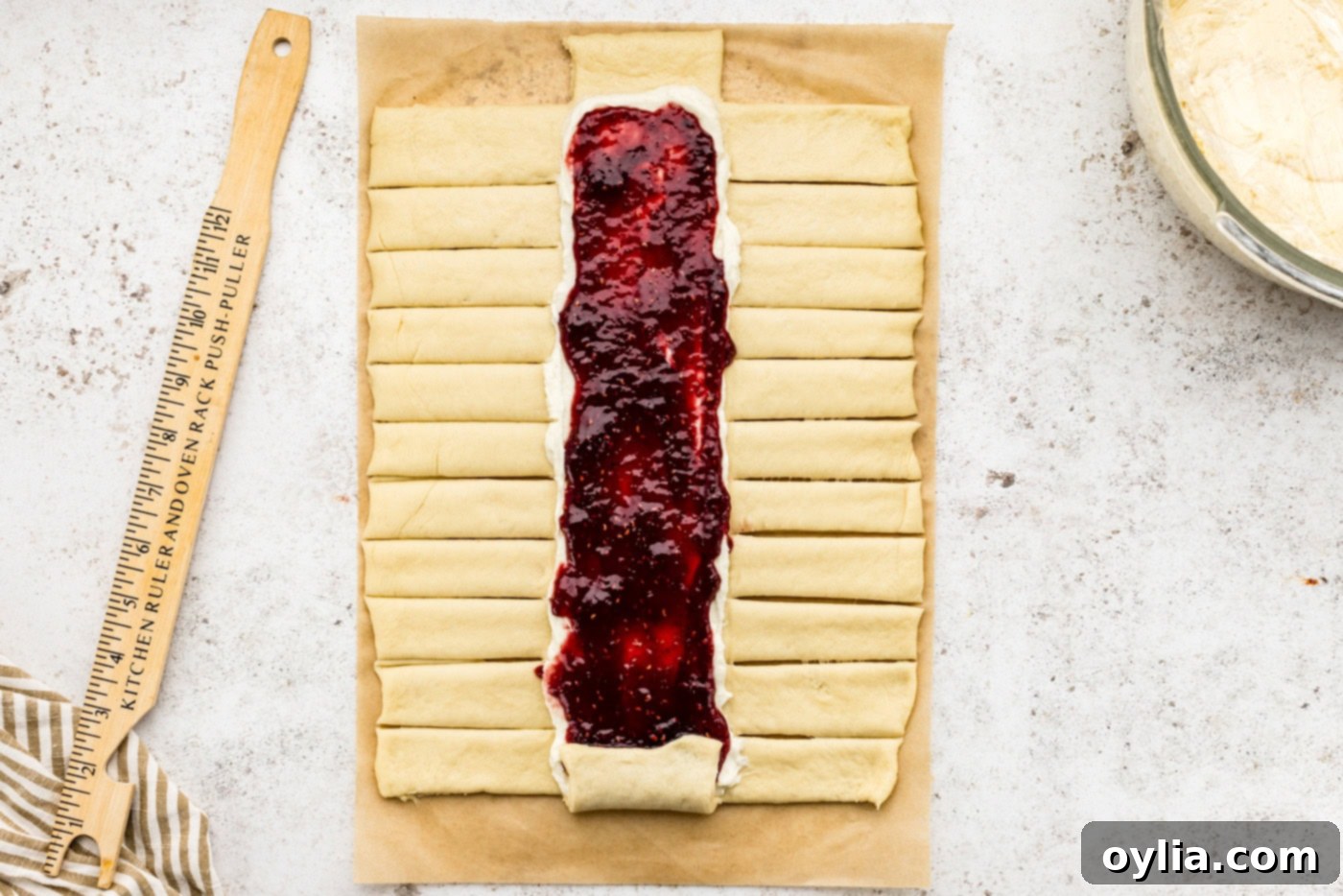
- Lightly press two lines lengthwise down the dough to divide it into three equal sections. Spread half of the cream cheese filling down the center section, and then top with half of the preserves, leaving a 1″ border free on all sides of the filling.
Braiding and Assembling Your Danish
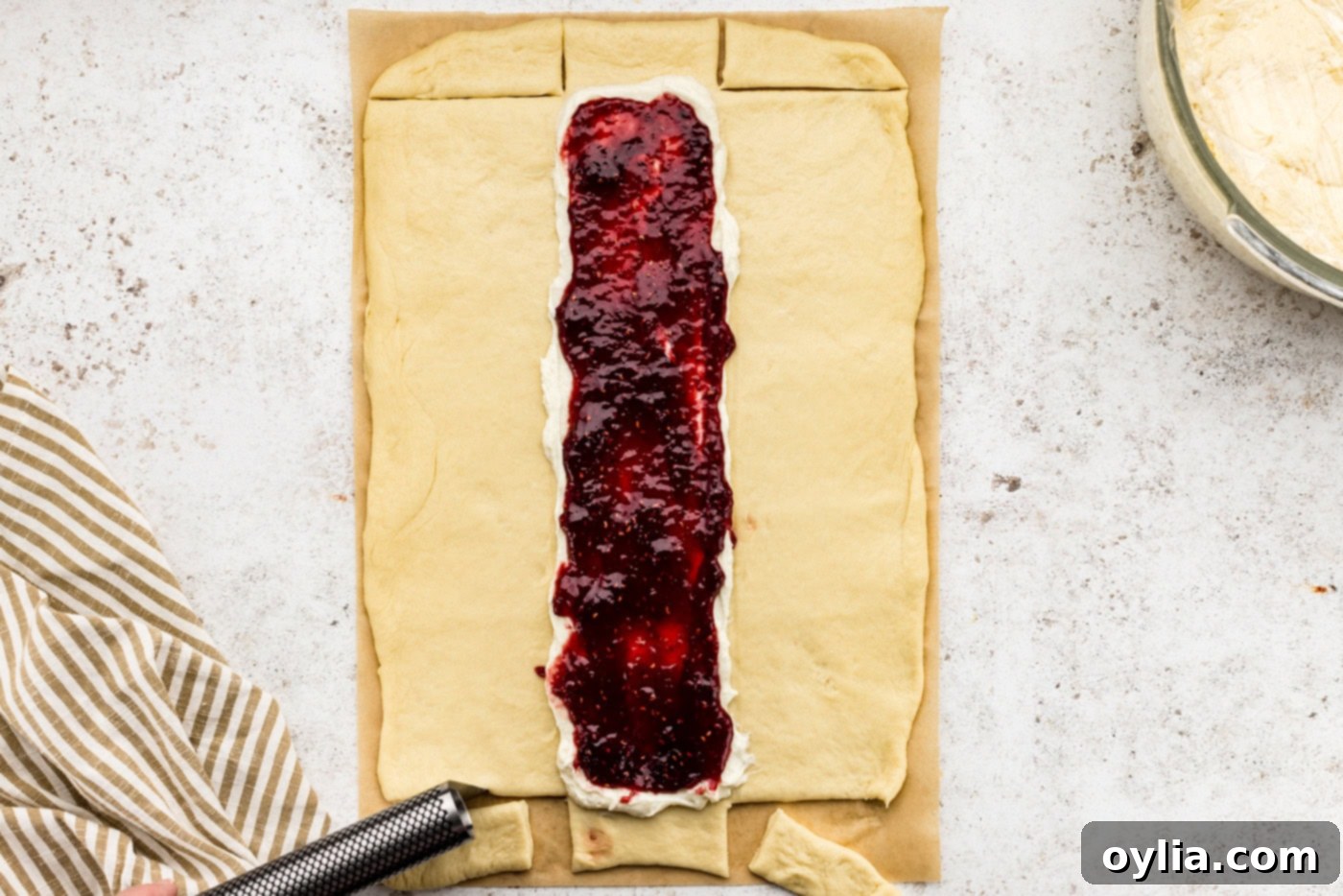
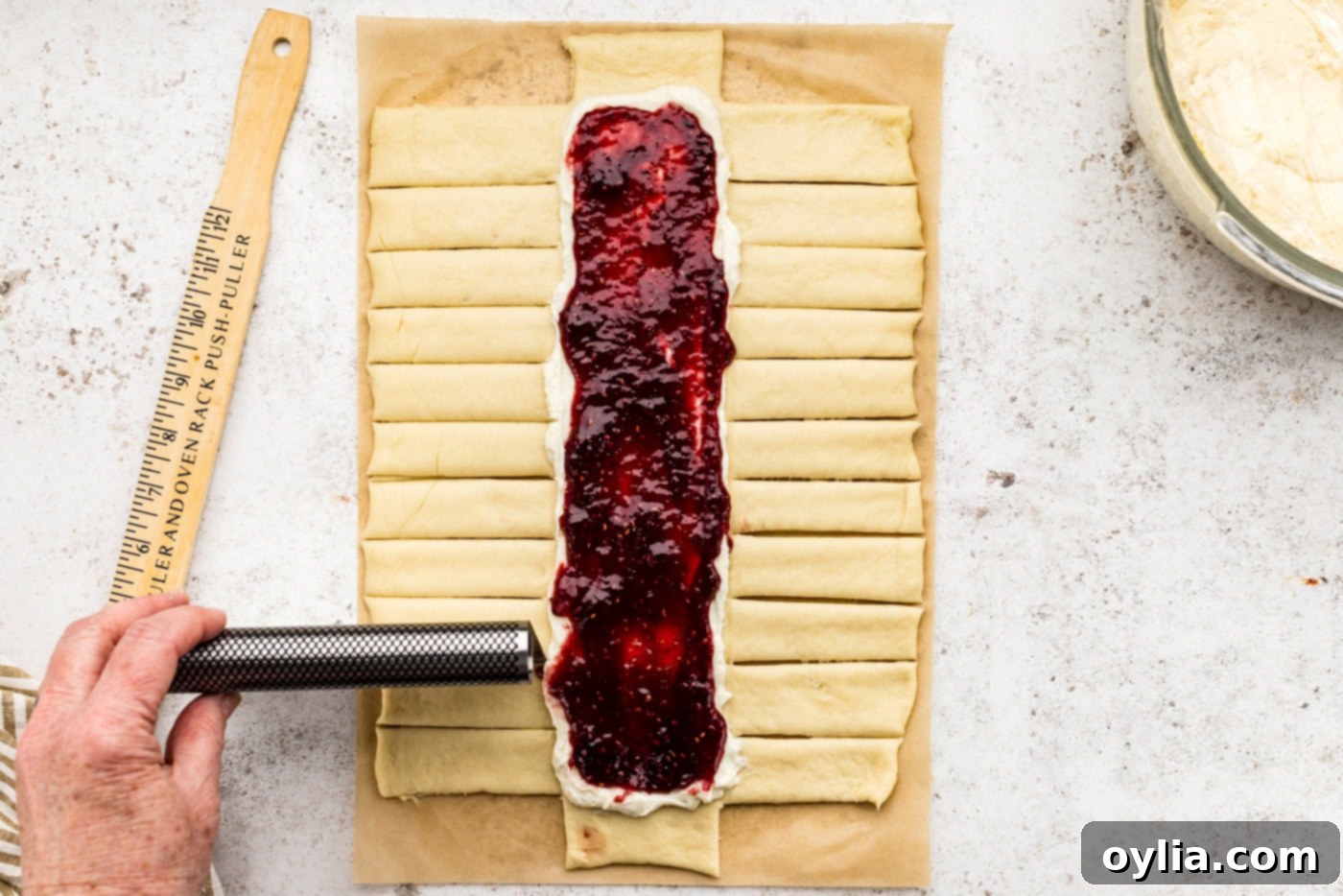
- To create the braid, start by cutting a 1″ triangle from each corner of the dough rectangle. Then, cut 1″ crosswise strips down the length of the outer sections, making sure you have the same number of strips on each side. This is most easily done using a pastry cutter, but a pizza cutter or kitchen shears can also be used.
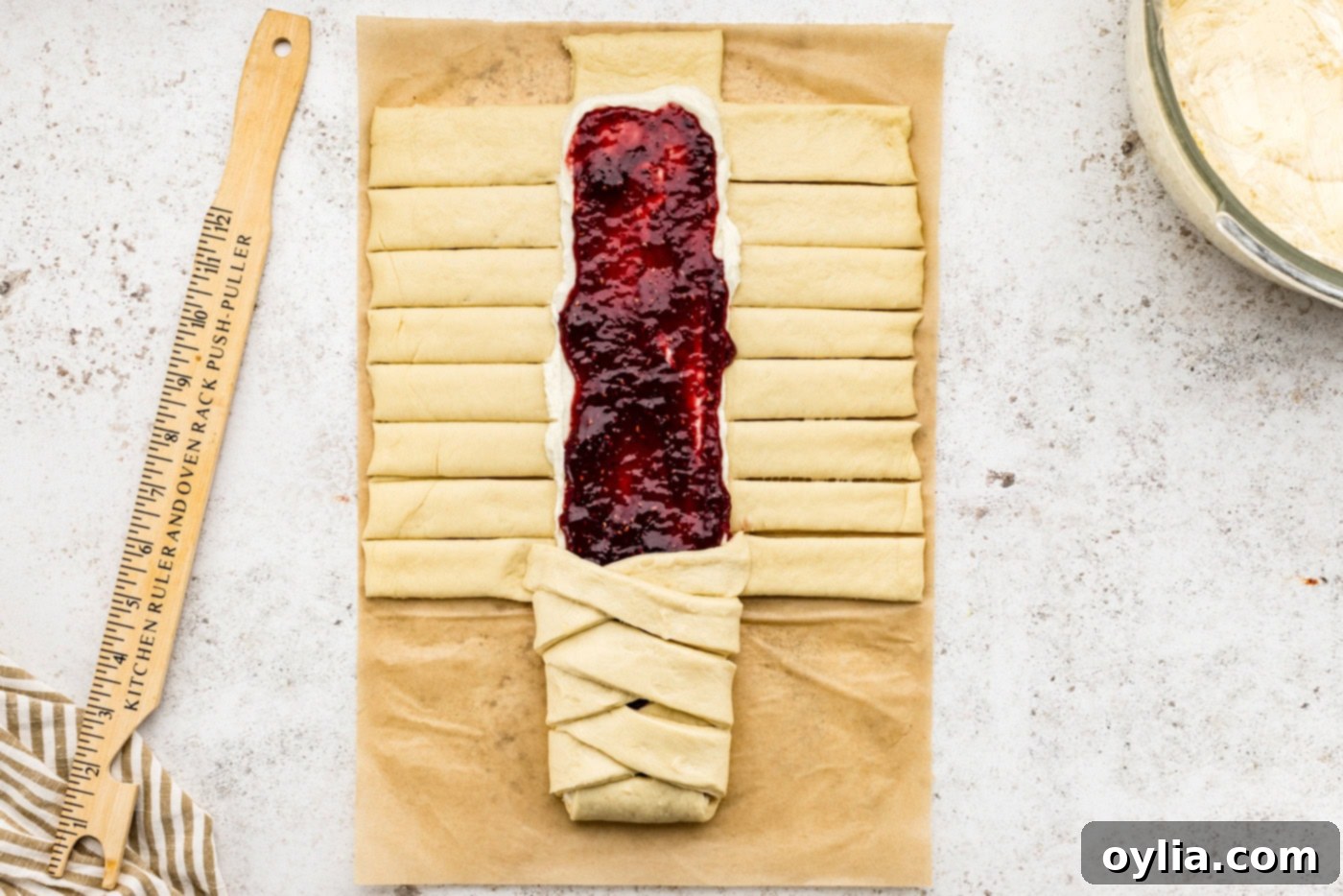
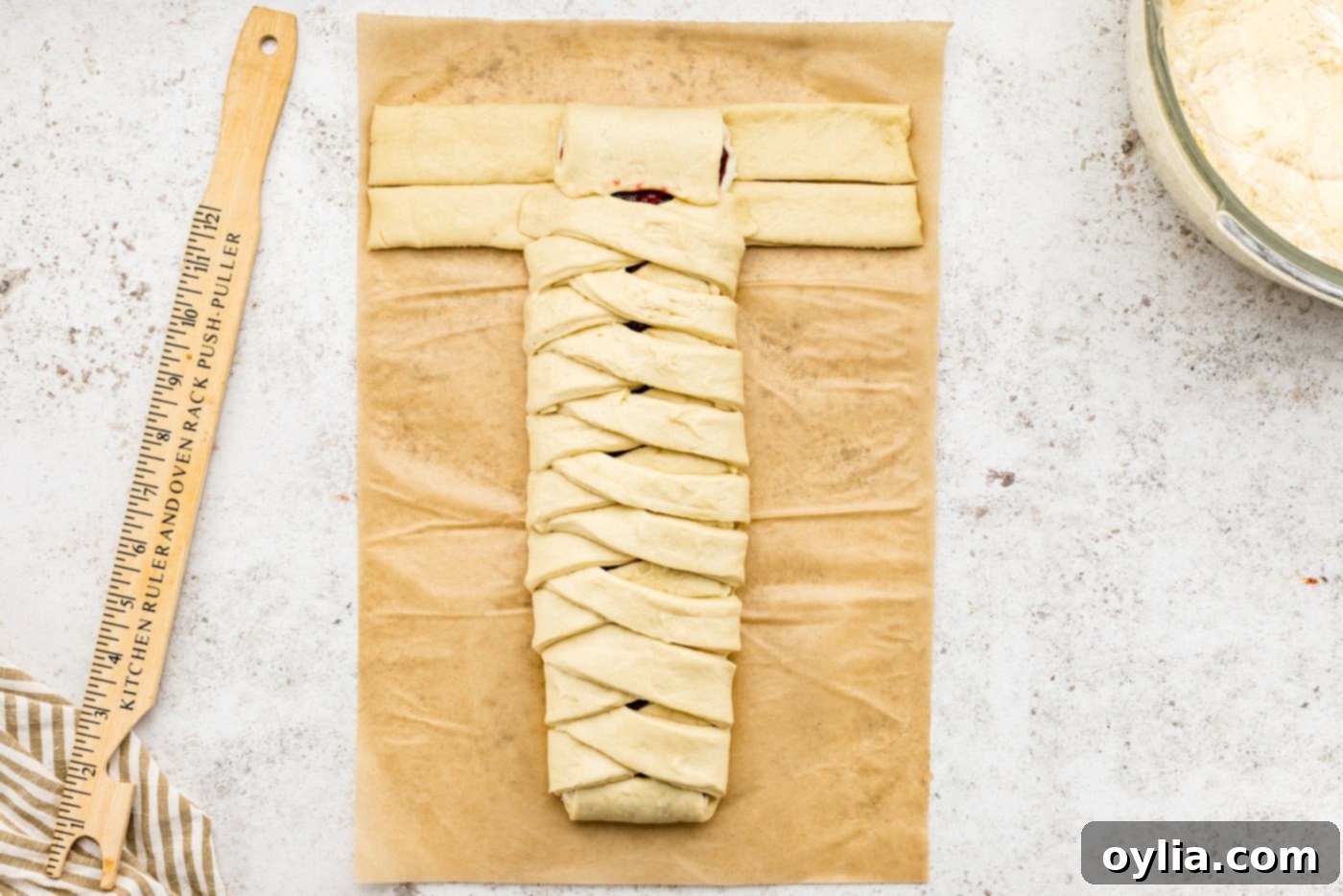
- To begin the braid, take one end of the center section of dough and fold it over the filling. Start on the left side, lift the top dough strip and gently bring it across the filling diagonally. Gently press the end of the strip into the dough where it rests. Repeat on the other side with the top dough strip, so that the two strips crisscross each other. Continue this process down the entire braid, alternating strips to form the loaf.
- Once you’re left with the two “legs” on either side, fold up the end section of dough and criss-cross the “legs” over the top, then tuck them underneath the loaf.
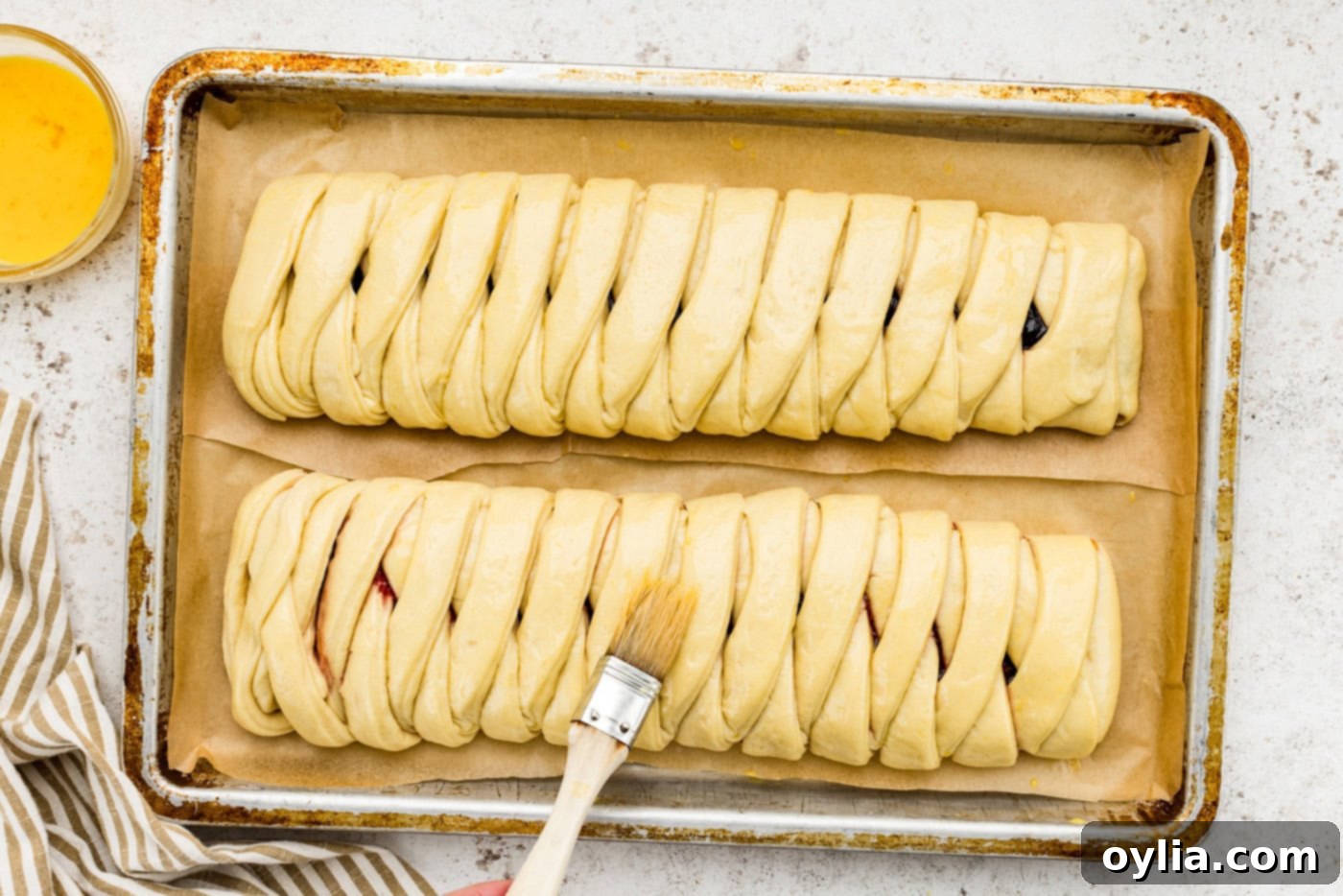
- Repeat the rolling, filling, and braiding steps with the second piece of dough, using the remaining cream cheese filling and preserves. Carefully slide the loaves on the parchment paper onto an insulated baking sheet. You should be able to fit both loaves on one sheet, but you may need to trim the parchment paper. Cover the loaves with a soft cloth and let them rise for 45 to 50 minutes, or until they become quite puffy.
- Preheat the oven to 375°F (190°C). Brush the loaves with egg wash (made with one lightly beaten egg, 2 teaspoons of water, and a pinch of salt) and bake for 25 to 30 minutes, or until the loaves are beautifully golden brown. Remove them from the oven and allow them to cool for 15 to 20 minutes.
- To prepare the drizzle, slowly add small amounts of milk to the powdered sugar until you achieve a thick but drizzling consistency. Place the loaves on a cooling rack and position waxed paper underneath to catch any drips. Drizzle the powdered sugar glaze back and forth across the loaves. Allow the glaze to set before serving.
Frequently Asked Questions & Expert Tips for Danish Perfection
A sponge is essentially a starter, a mixture of yeast, flour, water, and sugar. A sponge lets the yeast start working before adding it to the rest of the dough. Because this dough has eggs and butter in it, it makes for a much richer dough and also makes it a little harder for the yeast to work and do its thing. Using a sponge gives it that little bit of head start that it needs. After mixing the sponge ingredients, cover it with plastic wrap and let it work for about 15-20 minutes. It’ll get all frothy and bubbly. That’s how you know you didn’t kill your yeast!
Although this danish is best enjoyed right away, you can store your leftovers in an air-tight container kept in the refrigerator for up to 3 days. Breads of this sort tend to dry out when refrigerated, but due to the filling (cream cheese), it should be kept chilled. I would recommend allowing it to rest at room temp for around 30 minutes before eating leftovers, or pop it in a toaster oven to rewarm.
I have not tried freezing this and baking it later, though I’d imagine it would be okay. However, because this is a yeast dough, you would need to parbake it first. Parbaking means that you are partially baking the dough so it can be frozen and baked again later. Parbaking kills the yeast and sets the proteins and starches. This would need to be parbaked, frozen, then put back in the oven to be finished off. Because I have not done that with this danish, I couldn’t say for sure how long to bake it before and after. I can tell you that parbaking develops a crust, but not enough to begin browning. The browning takes place after it comes out of the freezer and is placed in the oven for its final bake.
Serving Suggestions for Your Braided Danish
A slice of this braided breakfast danish pairs wonderfully with a cup of coffee or tea. You can also wrap up a slice to include in lunches or enjoy it as a sweet treat after dinner. There’s really no right or wrong way to savor this delicious pastry.
The powdered sugar drizzle is completely optional, but I highly recommend including it! That final touch of sweetness elevates the danish to a whole new level. Enjoy your danish warm or at room temperature. I hope you love it!
More Breakfast Recipes to Try
- Blackberry Scones
- Crescent Danish Wreath
- Blueberry Breakfast Cake
- Cranberry Cream Cheese Pastries
- Cherry Cream Cheese Coffee Cake
I love to bake, cook and share my kitchen experience with all of you! Remembering to come back each day can be tough, that’s why I offer a convenient newsletter every time a new recipe posts. Simply subscribe and start receiving your free daily recipes!